
I bought a $15 plastic gadget from a TikTok shop last week just because I was bored. Let me be real with you, scrolling on your phone and feeling the urge to buy something you do not need is a trap we all fall into.
But there is a better way to handle your money, and it is called the underconsumption core. Underconsumption core is a trending lifestyle where you choose to buy less, use what you already own, and stop buying things to follow fast trends.
It is the ultimate way to create a minimalist budget. According to NerdWallet, how you spend your money matters more than how much you earn.
Instead of chasing sales, you keep cash in the bank. You will learn exactly how to use these underconsumption core tips to save daily.
What Is Underconsumption Core?
Underconsumption core means choosing to use what you already own and saying no to the pressure of always buying something new. This trend makes it easy to prioritize long-term goals over short-term impulse buying.
What it is NOT:
- Not about being cheap
- Not about depriving yourself
- Not about living without joy
What it IS:
- Using what you already own
- Buying only what you truly need
- Saying no to buying pressure
I used to buy three new sweaters every fall just to feel trendy. Now, I wear my favorite old sweaters and feel perfectly happy. You can absolutely build a rich life with less stuff.
Why the Underconsumption Core Is Perfect for Low Income
This lifestyle is perfect for low-income earners because it instantly lowers monthly expenses without requiring a second job. You start saving cash today just by changing habits. Here is the thing: you do not need a large salary to win here.
- Saves $100-$300/month average
- Reduces financial stress immediately
- Works with zero extra income needed
| Old Habit | New Habit | Monthly Saving |
| Buying new clothes | Wear what you own | $50-$100 |
| Daily coffee out | Make at home | $60-$90 |
| Impulse Amazon buys | 48 hour wait rule | $50-$150 |
| New phone every year | Keep current phone | $30-$80 |
You have the power to control your money right now.

10 Underconsumption Core Tips to Buy Less and Save More
1: Use What You Already Own
Look inside your closets and cabinets before you spend a single dollar at the store. You probably have enough clothes, shoes, and household supplies to last for months.
By using up what you have, you easily keep $50 in your pocket this week. You will be amazed at what is hiding in your own home.
2: Apply the 48-Hour Rule
Wait a full 48 hours before you buy anything that is not a basic need, like groceries. This cooling-off period stops the emotional rush of shopping and gives your brain time to be logical about the purchase.
Last month, I wanted a $40 water bottle badly. I waited two days, realized my old one worked fine, and kept my money. It works like magic.
3: Unfollow Brands on Social Media
Remove every single store and influencer from your feed who makes you want to spend money. Marketing is designed to make you feel like you do not have enough, so removing the temptation fixes the problem.
This stops you from spending $30 on a trendy shirt you did not even want yesterday. Protect your peace and your wallet.
4: Shop Your Own Home First
Walk through your house to find items you can repurpose when you think you need to buy something new. An old glass jar can become a beautiful pen holder instead of buying a $15 desk organizer online.
This simple habit keeps your creativity going and your money safe at the same time. You have hidden treasure sitting everywhere.
5: Finish Before You Buy More
Use every last drop of your shampoo, lotion, and makeup before you purchase a new bottle. You probably have backups of products sitting in your cabinet right now, which traps your money in crowded bathroom cabinets.

Getting an extra two weeks out of a $12 face wash adds up to big savings over a year. Let your products run entirely empty first.
6: Borrow Before You Buy
Ask a friend or neighbor to lend you an item if you are only going to use it one single time. Buying a $60 power drill to hang one picture frame makes zero sense when someone next door has one sitting idle.
This builds strong community connections while saving you cash. Do not be afraid to ask for a favor.
7: Unsubscribe From Sale Emails
Delete yourself from store email lists so you never know when a big retail sale is happening. If you do not know about the big 50 percent off event, you will not spend $100 on items you do not need.
Your inbox should be for messages from humans, not store advertisements. Take out the digital trash today.
8: Track Every Dollar You Do Not Spend
Write down the exact cost of every single item you successfully talk yourself out of buying. Seeing those numbers add up creates a massive mental boost that makes saving money actually feel fun.
I keep a running list on my phone, and it helps me stick directly to my bare bones budget. Celebrate your daily financial wins.
9: Find the Free Version First
Search for a totally free alternative before you hand over your credit card for entertainment or education. Check out books from your local library, use free workout apps, or learn new skills on YouTube instead of buying expensive courses.
Why pay $20 a month for audiobooks when the library app is entirely free? The best things in life cost nothing.
10: Make a “Do Not Buy” List
Write down a strict list of categories you simply refuse to spend money on anymore. When you set hard boundaries, you remove the daily pressure to keep buying, which leads to expensive impulse shopping.
Deciding never to buy paper towels again easily saves you $15 a month without even trying. Set your rules and watch your savings grow.
How Much Can You Actually Save With Underconsumption Core?
You can save between $360 and $480 every single month by switching to an underconsumption core lifestyle. By making small choices to stop buying things you do not need, the extra cash stays directly in your checking account. Here is a breakdown of what a regular person can save.
| Category | Average Monthly Spend | Underconsumption Saving |
| Clothing | $150 | Save $100-$130 |
| Coffee/Eating out | $200 | Save $120-$160 |
| Subscriptions | $80 | Save $40-$60 |
| Impulse purchases | $100 | Save $70-$90 |
| Personal care | $60 | Save $30-$40 |
| TOTAL POSSIBLE | $590 | Save $360-$480/month |
Those numbers are completely life-changing for someone trying to escape the paycheck-to-paycheck cycle. If you want to jumpstart this progress, trying a no-spend month is an incredible way to begin. You can achieve these numbers easily.
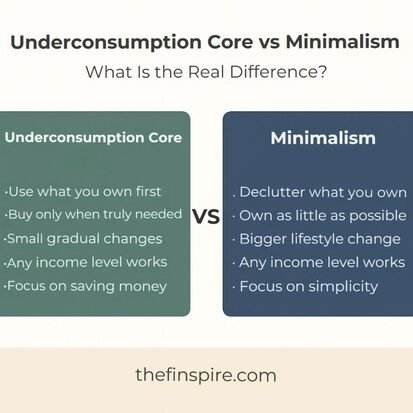
Underconsumption Core vs Minimalism: Quick Difference
Underconsumption core focuses on buying less going forward, while minimalism is about owning less stuff overall. While they sound similar, they target completely different habits. Minimalism requires massive decluttering, but this lifestyle just asks you to stop swiping your card.
| Underconsumption Core | Minimalism | |
| Goal | Buy less going forward | Own less overall |
| Start point | Use what you have | Declutter first |
| Lifestyle change | Small gradual shifts | Bigger lifestyle shift |
| Best for | Budget conscious people | People who want simplicity |
| Income needed | Any income level | Any income level |
Both tools help you stop buying things. You get to choose the path that brings peace.
Start Small. Save Big (Conclusion)
You do not have to change everything overnight. This lifestyle does not mean suffering; it means finding freedom from the endless pressure to buy. Even trying just two or three of these tips will make a massive difference in your bank account over time.
Trust me on this one. You can break your toxic money habits and replace them with intentional choices.

Look at the things I quit buying if you need some extra inspiration to get started today. Every dollar you save is a dollar buying back your freedom.
Which tip are you trying first? Drop it in the comments. No, seriously.
Got questions? Here are the ones people ask most:
Frequently Asked Questions
This concept means choosing to use what you already own instead of buying new items. It is a simple way of living focused on cutting out unnecessary purchases and avoiding fast trends. This habit saves money and stops clutter.
No, it is not about being cheap at all. Being cheap means refusing to spend money even on basic needs, while this lifestyle is about being intentional with your cash. You still buy what you need, just without excess.
You can easily save $200 to $400 a month by adopting this lifestyle. By cutting out daily coffees, fast fashion, and impulse buys, regular people keep hundreds of dollars in their pockets. Exact savings depend on your starting budget.
Start by waiting 48 hours before making any non-essential purchase. Next, unsubscribe from all retail emails to remove daily shopping temptations. Finally, commit to using up every product in your home before replacing it.
Yes, it works perfectly for low-income earners. Because it focuses on spending zero dollars and using what you already have, you do not need extra cash. It gives you real money back in your pocket fast.