The first time I searched “how to make passive income,” I got scammed.
Not a little scammed. A lot scammed.
I wasted three weeks on survey sites that paid me $0.03 per answer. Downloaded apps that promised free gift cards and delivered nothing. Watched YouTube videos from people in rented Lamborghinis telling me I could make $500 a day by next Tuesday.
None of it worked.
What I did not have was $4,000 to invest in stocks. I did not own a rental property. I was just a regular person with a laptop, zero budget, and a lot of frustration.
So I stopped watching videos and started actually testing things.
I spent the better part of a year trying different methods — some embarrassing failures, a few quiet wins. Here are the 5 that actually work for real beginners with no money to start.
1. Selling Simple Printables on Etsy
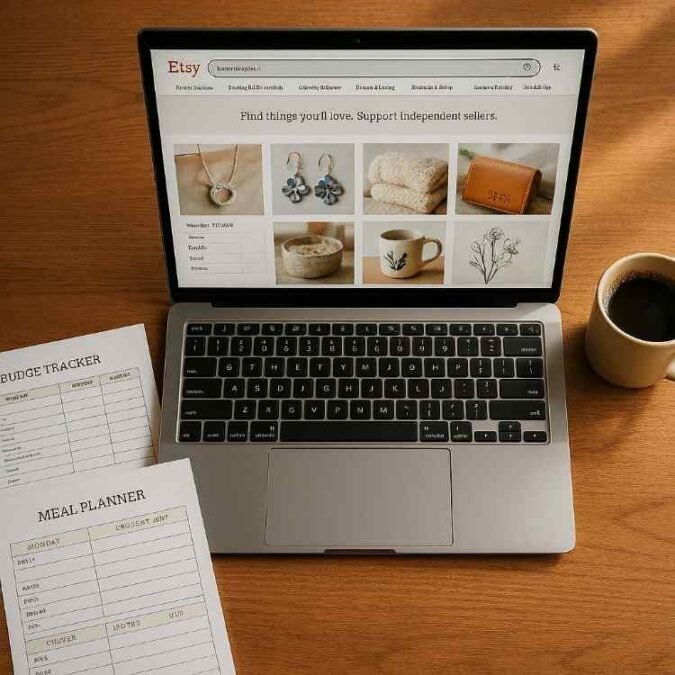
This one sounds strange until you see the numbers behind it. People sell basic digital files on Etsy — checklists, grocery planners, budget trackers, habit trackers — and make real money. Not because the designs are gorgeous. Because people want organized lives and would rather pay $3 to download a clean template than spend an hour building one themselves. You make the file once. It sells over and over. No shipping or inventory. No customers to deal with after the sale.
Here is exactly how to start:
Use Canva — the free version is enough. Design something simple. A weekly meal planner, a bill tracker, and a daily to-do list. Nothing complicated. My first printable took about 20 minutes. Creating the file costs nothing. Etsy charges $0.20 to list one item. The reason this works is simple. People who need a budget tracker right now do not want to build one. They want to download one, print it, and start today. You are saving them time, and time is worth $3 to most people.
If you already use a bare-bones budget to manage your money, you already know what these templates need to look like. That is your unfair advantage.
2. Affiliate Marketing Through Pinterest
The name makes it sound complicated. It is not.
Affiliate marketing means recommending a product and earning a small commission when someone buys it through your link. That is the entire concept.
Most people think you need a huge blog or a massive following to do this. That is not true. Pinterest is one of the easiest places to start with a zero audience.

Here is how it works in practice:
Sign up for the Amazon Associates program — it is free and takes about ten minutes. Go to Canva and create a simple Pin image featuring a product you genuinely use and like. A desk lamp. A kitchen gadget. A planner. Add your Amazon affiliate link to the Pin and post it on Pinterest. When someone finds your PIN, clicks the link, and buys the product, Amazon pays you a commission. You never touch the product. Never talk to a customer. You never handle a return. The Pin keeps working long after you post it. That is the passive part.
3. Renting Out Things You Already Own
Most people are sitting on rentable assets and do not realize it.
I had a decent camera that came out of the bag maybe four times a year — always on vacation, never at home. The rest of the year, it sat in a closet doing nothing. I listed it on a peer-to-peer rental platform. Within two weeks, it had covered my monthly internet bill without me doing anything differently.
Here is what most people can rent:
Your car is the biggest opportunity. Platforms like Turo let you rent your car to verified drivers when you are not using it. Many people cover their entire car payment this way. A parking spot in a city is worth real money. If you have one you rarely use, someone nearby will pay a monthly rate just to have guaranteed parking.
Extra storage space — a garage, a spare room, even a large closet — has real value to people who need somewhere to keep boxes between moves. The key question to ask yourself is simple. What do I own that sits unused most of the time? The answer is usually worth more than you think.
4. High-Yield Savings Accounts
This is the option for anyone who does not want to take any risk whatsoever.
A standard bank account pays somewhere around 0.01 percent interest per year. On $1,000, that is ten cents. Genuinely insulting. Online banks like Ally or SoFi regularly offer 4 to 5 percent interest on the same money. On $1,000, that is $40 to $50 a year for doing absolutely nothing except moving your money to a different account.
It is not retirement money. But it is completely free, completely passive, and takes about fifteen minutes to set up. If you are working on getting out of debt first, this still matters. Even a small emergency cushion in a high-yield account earns more than sitting in a regular bank. Every dollar working harder is still progress.
5. Uploading Designs to Redbubble
Full disclosure — I cannot draw. My artistic ability stops somewhere around stick figures. Redbubble is a print-on-demand platform. You upload a design, and they print it on t-shirts, mugs, phone cases, and stickers. They handle everything — production, shipping, customer service. You collect a royalty on every sale.
The trick most people miss is that text-based designs sell extremely well. Funny quotes about Mondays, coffee, specific jobs, and specific cities. Simple typography. Nothing requiring artistic skill. I typed a few funny phrases in a clean font on Canva. Uploaded them. A few sold within the first month. Not life-changing money immediately. But completely passive once the designs are up — and the designs stay up forever.
The Honest Truth About Passive Income
Here is what nobody says clearly enough at the start.
None of these methods produce money overnight. The “passive” part comes after the work — after you build the Etsy listing, after you create the Pinterest Pin, after you upload the design. The people who fail at this try to do all five methods at once, get overwhelmed in week two, and quit before anything has time to work.

Pick one method from this list. Just one. Give it 30 days of real effort. If you have zero money to start, begin with Redbubble or the Pinterest affiliate method. Both cost nothing. If you have $5, the Etsy printable route has the highest earning potential per hour invested.
The goal for week one is not $500. The goal is your first $1 online. That first notification changes something in how you think about money — and that mindset shift is worth more than the dollar itself. These passive income ideas pair well with fixing your toxic money habits at the same time. Earning more only helps if the spending leaks are also closed.
Frequently Asked Questions
Redbubble and Pinterest affiliate marketing are the easiest starting points with zero investment. Both require only a free Canva account and about an hour of setup time. Redbubble handles all printing and shipping automatically once your designs are uploaded.
Most beginners see their first small earnings within 30 to 90 days, depending on the method. Etsy printables and Redbubble designs can take several weeks to get discovered. Pinterest affiliate pins can start generating clicks within days if the image is eye-catching and the product is in demand.
Every passive income stream requires upfront work before it becomes passive. Creating an Etsy listing, designing a Redbubble product, or building a Pinterest Pin all take time at the start. Once they are live, they can generate income with minimal ongoing effort — but “zero work forever” is not realistic for most methods.
Yes — three of the five methods on this list require zero upfront investment. Redbubble, Pinterest affiliate marketing, and renting out things you already own all cost nothing to start. Etsy charges $0.20 per listing, making it nearly free as well.
Selling printables on Etsy or uploading designs to Redbubble work well for people on tight budgets because they use skills most people already have and completely free tools. Combined with a solid budget system, even small passive income amounts make a real difference month to month.