

You’re sitting at a trendy brunch spot in Brooklyn or downtown Chicago, staring at a menu where avocado toast now costs $22. You’re mentally calculating how much this meal is going to set back your savings goals for the month.
Then the bill comes. Someone suggests, “Let’s just split it evenly!”
Your heart sinks. You ordered a side salad and water. They had three mimosas and the steak and eggs. But you smile, pull out your card, and pay up because you don’t want to be “that person.”
Sound familiar?
For years, money has been a taboo topic across America. People are taught to smile and pretend everything is fine while their bank accounts quietly drain. But there is a massive shift happening right now.
It’s called Loud Budgeting. And honestly? It might be the most freeing thing you can do for your finances in 2026.
If you’re tired of the social pressure to overspend and want to finally take control of your money — keep reading.
What Exactly Is Loud Budgeting?
Let’s clear something up right away. Loud Budgeting doesn’t mean shouting your bank balance from the rooftops or being rude at the dinner table.
The concept started gaining traction on TikTok a couple of years ago, but in 2026 it has exploded into a full-blown lifestyle movement across the US. Loud Budgeting is the practice of openly and confidently stating your financial boundaries — without apologizing for them.

It is the direct opposite of “Quiet Luxury” — that exhausting trend where everyone tried to look effortlessly rich by buying expensive, neutral-toned everything.
Instead of declining an invite with a vague excuse like “I’m busy that night” when you’re actually watching your spending, Loud Budgeting encourages honesty. You say, “I’d love to come, but I’m saving for a down payment right now, so I’m skipping expensive nights out this month.”
Why It’s Different From Regular Budgeting
Traditional budgeting feels lonely. You sit at your kitchen table with a spreadsheet, stressing out in private while pretending everything is fine in public.
Loud Budgeting brings your goals into the real world. It removes the shame around saving money and frames it as a deliberate choice you’re proud of — not a restriction you’re embarrassed by.
It’s not about being broke. It’s about being in control.
Why Loud Budgeting Actually Works
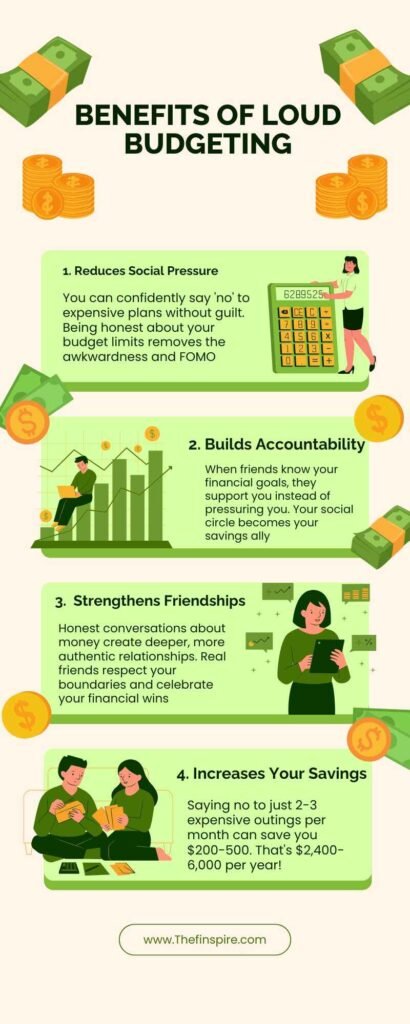
You might be thinking, “I can’t tell people I’m on a budget — it’s so awkward.” Fair enough. Talking about money is personal. But here is why being open about your financial goals is a genuine game-changer for both your wallet and your mental health.
1. It Kills the FOMO
When you make up a fake excuse to skip a trip to Vegas or a weekend away, you sit at home feeling bad about not being there. But when you state your real reason — “I’m not going because I’m paying off my credit card debt” — you remind yourself exactly why you’re making the sacrifice.
You trade short-term fun for long-term financial freedom. That shift in mindset is everything.
2. It Creates Real Accountability
If you tell your best friend you’re doing a no-spend month, they’re not going to tempt you with expensive coffee runs or bar nights. By stating your intentions out loud, you turn the people around you into accountability partners rather than spending triggers.
3. It Normalizes Money Talk
This is the hidden superpower of Loud Budgeting.
The moment you say “I can’t afford that right now,” you’ll often see a look of relief on your friends’ faces. The cost of living across America is genuinely tough right now. Chances are your friends were stressed about the cost of that dinner too — but no one wanted to be the first to say it.
You give everyone else permission to be honest. That’s more powerful than it sounds.
Working on breaking the toxic money habits that got you here in the first place makes Loud Budgeting even more effective.
How to Practice Loud Budgeting (Without Being Rude)
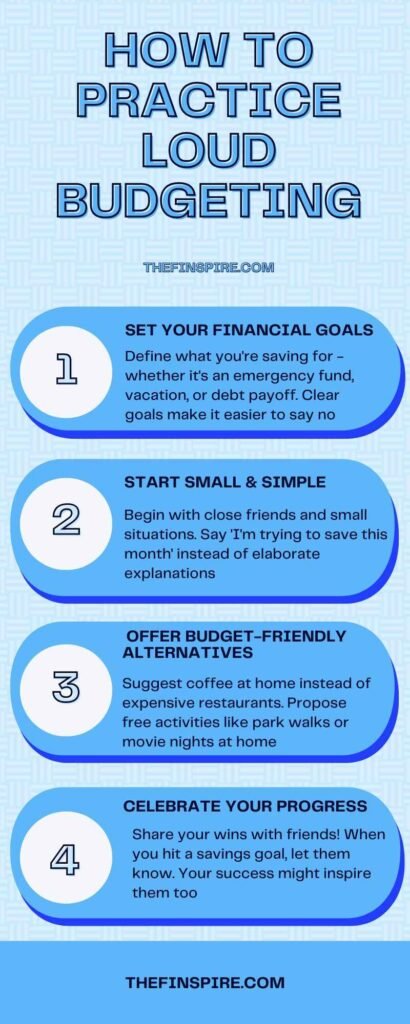
You’re ready to try it. But how do you actually say no without sounding like a buzzkill?
The key is to be firm and kind at the same time. Here are real scripts you can use in different situations starting this week.
Scenario 1: The Expensive Dinner Invite
Your friends want to try that new restaurant where entrees start at $40.
- ❌ The Old Way: “Ugh, I think I have a headache, I can’t make it.”
- ✅ The Loud Budgeting Way: “That place looks amazing, but it’s not in my budget right now. I’m really focused on building my emergency fund this month. Do you guys want to come over for a potluck or game night instead?”
You didn’t just say no. You offered a real alternative. That’s the difference. A solid bare-bones budget makes these conversations much easier because you already know exactly what you can and can’t spend.

Scenario 2: The Group Gift
A coworker is collecting $50 from everyone for a leaving gift.
- ✅ The Loud Budgeting Way: “I love the idea of getting her something special, but $50 is a bit steep for me right now. I’m going to get her a nice card on my own. Thanks for organizing!”
No drama. No awkward silence. Just a clear, honest answer that respects both your budget and the moment.
Scenario 3: The Destination Wedding
You’re invited to a wedding in Italy or Mexico that will cost thousands of dollars.
- ✅ The Loud Budgeting Way: “I’m so happy for you both! I have some serious savings goals this year, so I won’t be able to make the international trip. I’ll definitely be there to celebrate with you when you’re back home.”
The Golden Rule
When practicing Loud Budgeting, never apologize for your goals.
Don’t say “I’m sorry, I’m poor.” Say “I’m prioritizing my future.”
That one shift changes everything about how the conversation feels — for you and for the person you’re talking to.
As personal finance expert Tiffany Aliche once said, budgeting is not about limiting yourself. It’s about making the things that actually matter to you possible.
Common Challenges and How to Handle Them
It’s not always going to be smooth. When you start setting financial boundaries, you might face some friction from the people around you.
Dealing with Judgment
Some people won’t get it. They might call you cheap or roll their eyes. Here’s the thing — people’s reactions to your boundaries say everything about their relationship with money and nothing about yours.
If someone pressures you to spend money you don’t have, they aren’t respecting your goals. Stay the course. Your financial future is worth more than their temporary approval.
The “This Sounds Boring” Factor
You might worry that saying no to spending means sitting at home staring at the wall. It doesn’t.
Free options that are genuinely fun:
- Go for a hike or walk at a local trail
- Host a movie night at home
- Check out free museum days — DC alone has over 20 free museums
- Have coffee in the park instead of a $7 latte at a café
- Start a backyard cookout tradition instead of expensive restaurants
Living below your means doesn’t mean living a small life. Pairing this mindset with underconsumption core habits makes the lifestyle feel natural rather than restrictive.
Real Loud Budgeting Success Stories From the US
These are real stories from people who tried this approach and saw results that surprised them.
Meet Sarah — 28, Boston
Sarah was drowning in credit card debt but kept saying yes to expensive bachelorette parties and weekend trips she couldn’t afford. She finally tried Loud Budgeting.
“I told my group chat: ‘Guys, I love you all, but unless the plan costs under $30, I can’t join until my Visa is paid off.’ I thought they’d be annoyed. Instead, they changed the plans to a beach day. I paid off $3,000 in six months because I stopped pretending.”
Meet Mike — 32, Chicago
Mike wanted to buy a house but was spending $400 a month on lunches out with coworkers.
“I just started bringing my lunch and told them, ‘I’m saving for a down payment — this is my Loud Budgeting lunch.’ Now three other guys bring their lunch too, and we talk about investing while we eat.”

Are You Ready to Get Loud?
Loud Budgeting is more than a passing trend. It’s a mindset shift that changes how you relate to money and to the people in your life.
By speaking up, you stop letting social pressure dictate your bank account. You find out who your real friends are — the ones who support your goals, whether you’re eating steak or ramen.
This week, say no to one thing that doesn’t align with your money goals. Be honest about why.
You might be surprised at how good it feels.
Ready to take the next step? Read my guide on how to survive a no-spend month to kickstart your savings this month.
Frequently Asked Questions
Not at all! It is actually more polite than canceling last minute or being resentful about the bill. As long as you are kind and explain that it’s about your goals (not their expensive taste), people are usually very understanding.
No. Loud Budgeting is about sharing your intentions, not your numbers. You never need to share your salary or debt amount. Simply saying “it’s not in the budget right now” is completely enough.
If friends stop inviting you simply because you’re not spending money, they were likely more interested in your wallet than your company. Be proactive — whenever you decline an expensive plan, immediately suggest a free or cheaper alternative so they know you still want to spend time together.
Absolutely. This isn’t only for people who are struggling. Many high earners use this strategy to stay wealthy and intentional with their money. It’s about making sure your spending habits line up with your actual values — regardless of how much you make.
You don’t have to announce your budget to everyone at once. Start with just one trusted friend or family member. Tell them your savings goal and ask them to keep you accountable. Even one person knowing your goal makes a real difference — you don’t need to post it on social media or tell your whole social circle on day one.